
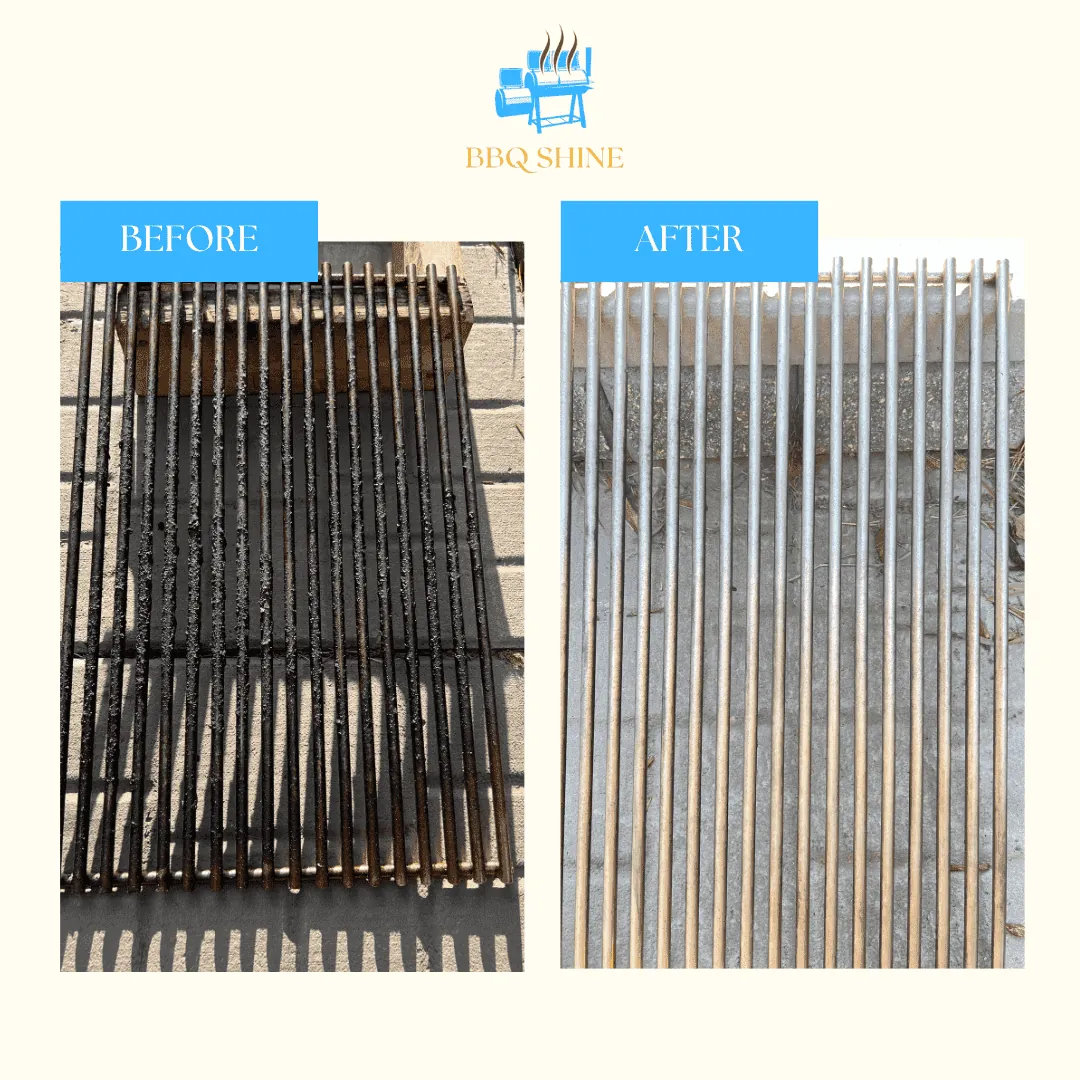
Grease and residue build up gradually
Most grills do not become heavily soiled after one cook. The problem develops gradually: a little grease below the grates, some carbon on the cooking surface, drippings in a tray, and small food particles in corners that are easy to ignore. When that cycle repeats for months, the grill becomes much harder to clean with normal maintenance.
This is why regular light cleaning and occasional deep cleaning work best together. Routine care keeps the obvious surfaces under control. A deeper clean addresses the buildup that has accumulated below and around those surfaces over time.
Heavy grease can contribute to flare-ups
Grease that collects close to heat can ignite and create sudden flare-ups. Some flare-ups are a normal part of grilling, but a grill with excessive grease accumulation can become more difficult to control. Keeping drip trays and grease-management areas from overflowing is basic maintenance that should not be postponed until the grill is already heavily soiled.
If grease has hardened into thick layers or spread through areas that are difficult to reach, professional cleaning can be useful. Cleaning should never be treated as a substitute for repairing damaged burners, gas components or electrical parts; those issues require appropriate technical service.
Old residue can affect the cooking experience
When grates are coated in old carbon and burnt food residue, fresh food is contacting yesterday’s cook before it reaches the metal. That can create unwanted smoke, odours and flavours. Keeping the cooking surface cleaner makes it easier to control what is actually contributing flavour to the food.
The same principle applies below the grates. Thick grease and old residue can produce smoke when heated. A clean cooking chamber will not change the recipe, but it gives you a more predictable starting point.
Cleaning also makes the grill easier to inspect
A layer of grime can hide corrosion, worn coatings and damaged components. Once the grill is clean, it is easier to see what condition the equipment is actually in. That does not mean cleaning fixes corrosion or mechanical wear, but it can make those problems easier to identify before the next cook.
For an expensive BBQ, consistent maintenance also helps protect the investment. The best approach is not aggressive scrubbing every week; it is using the right method for the material, keeping grease under control and dealing with buildup before it becomes extreme.
A simple maintenance routine
After cooking, follow the grill manufacturer’s guidance for cleaning the grates. Check and empty drip or grease trays regularly. Wipe exterior spills before they bake onto the finish. Keep the BBQ protected from weather where appropriate, and avoid harsh household products that are not intended for the surface you are cleaning.
How often a full deep clean is needed depends on usage. A grill used several times a week will accumulate residue faster than one used occasionally. Instead of following a rigid calendar, watch the condition of the cooking surface, grease-management areas and interior buildup.
When it is time to call a professional
If the cleaning job has become larger than you want to tackle, the grill has been neglected for a season, or heavy buildup is difficult to remove safely, a professional service can save time and mess. BBQ Shine provides mobile BBQ cleaning throughout Calgary, so the grill stays at your home and the work is completed on site.
Cleaner Grill — Safer Meal.
Book BBQ Shine for professional BBQ cleaning and disinfection in Calgary.
Book now